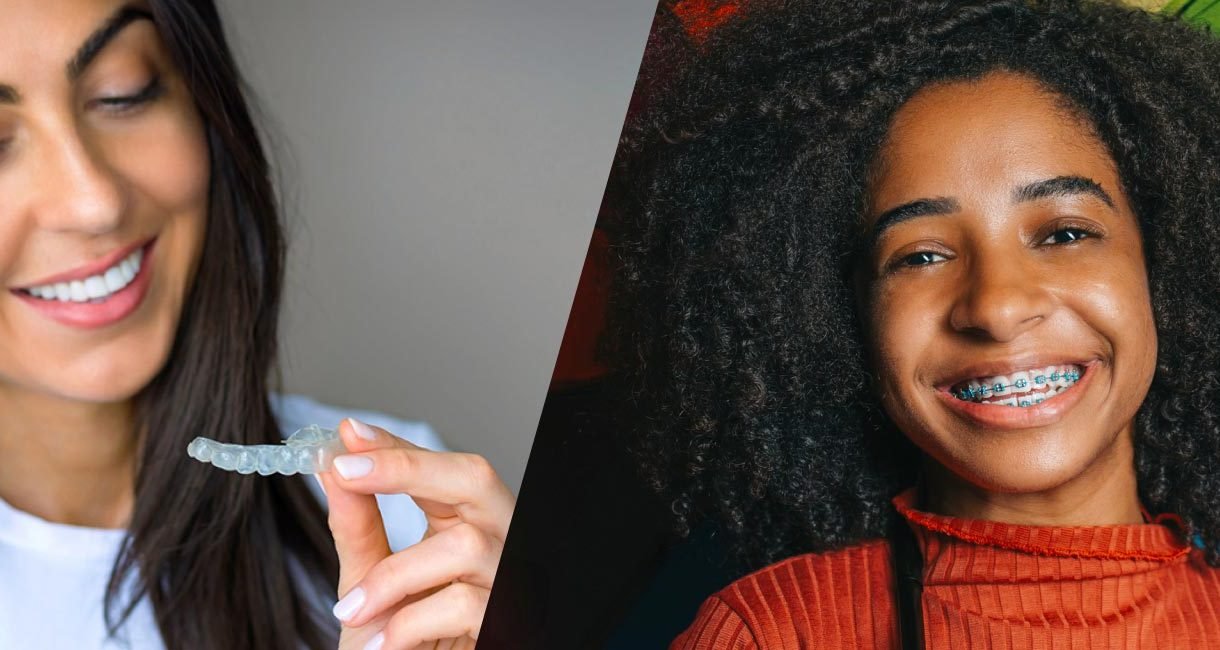

Deciding between Invisalign® and traditional braces can be a tough call, especially when determining which treatment best suits your lifestyle and oral needs. Whether you’re looking for a discreet option or a time-tested solution like braces, it’s important to weigh your choices carefully.
In this blog, we’ll break down both options in detail and compare their features to help you make the most informed decision for your smile.
So, here’s the big question: Does Invisalign® actually work? In this blog, we’ll give you a clear understanding of Invisalign® treatment so you can decide if it’s the right choice for you.
Invisalign® Aligners vs. Braces: Breaking Down the Key Differences
When considering your options on what treatment you should pick, it’s essential to compare both options across several key areas. From cost to comfort, we’ll explore how each method stacks up to give you a clearer understanding of what to expect.
Price
The cost of Invisalign® and traditional braces can vary depending on a lot of factors, such as the complexity of your case and your location. Clear aligners like Invisalign® tend to cost slightly more due to the custom-made materials and treatment fees.
Keep in mind that your total cost may differ based on how long your treatment lasts and any additional procedures that you might need depending on your orthodontic condition. Now, cost can be a major concern for many when it comes to orthodontic treatment. You may opt to have orthodontic insurance, which often covers some portion of the treatment, particularly for children and teens. However, if you’re not eligible for orthodontic treatment through insurance, many orthodontists may offer flexible payment plans and other financing options to make orthodontic treatment within reach.
Aesthetic Appeal
A crooked smile can ruin your confidence. Oftentimes, depending on your condition, you may need braces or Invisalign treatment to fix your smile. And of course, aesthetics play a huge role in choosing between the treatment options.
Traditional braces are very visible, especially when metal brackets are used. While you can opt for ceramic braces that blend more naturally with your teeth, they still stand out compared to Invisalign®.
On the other hand, Invisalign® aligners are nearly invisible, making them an attractive choice for those who don’t want to draw attention to their teeth and want a more subtle look. If discreetness is a priority for you, Invisalign® is likely the better choice as the aligners are clear and fit snugly over your teeth.
Comfort
When it comes to comfort, many patients find Invisalign® to be more manageable than traditional braces. Braces can cause irritation to the inside of your mouth due to the metal brackets and wires, especially in the early stages of treatment or after adjustments. These sharp edges can lead to discomfort and even sores inside your cheeks or lips.
Invisalign®, however, is made of smooth plastic which generally feels more comfortable against your gums and cheeks. You might experience slight discomfort when you switch to a new set of aligners, but it tends to be less intense than the pain some experience with traditional braces.
Effectiveness & Speed
Both Invisalign® and traditional braces are FDA-approved and can effectively treat a range of orthodontic conditions. However, the duration of treatment and its effectiveness can depend on your specific situation.
For less complex orthodontic conditions, Invisalign® is just as effective as braces, and, sometimes, it can offer a faster treatment time. Typically, Invisalign® treatment takes about 12 to 18 months, though it can be as short as six months for simpler cases.
Traditional braces, on the other hand, generally require one to two years for full results depending on the condition. While braces address a wider variety of conditions such as severely rotated teeth or major misalignments, Invisalign® may not be the best solution for more complex cases.
Eating
Eating with braces can be a challenge. You’ll need to avoid certain hard or sticky foods as they can damage the brackets or wires. Chewy foods like caramel, popcorn, and nuts can get stuck in them and/or break your braces. Plus, after every adjustment, you may find it uncomfortable to eat certain foods, especially within the first few days.
Invisalign® shines here and offers a major advantage when it comes to eating. Since aligners are removable, you can simply take them out before meals and enjoy your food without restrictions. Afterward, you’ll just need to brush your teeth and pop the aligners back in. This added convenience is one reason many people are more inclined to pick Invisalign®.
Care & Cleaning
Cleaning braces can definitely be time-consuming. You’ll need to brush carefully around the brackets and wires, and it’s easy for food to get stuck in places that are difficult to clean. You might have to purchase a different brush and some special tools, such as floss threaders, to floss around the braces.
Invisalign® is easier to maintain because the clear aligners can be removed to clean. You’ll simply brush your aligners just as you brush your teeth. But you’ll need to be responsible here as you’ll want to clean your aligners regularly to avoid buildup, but overall, the process is quicker and simpler.
Less Follow-Ups
Getting traditional metal braces involves several appointments. Your orthodontist will first place the brackets on your teeth, then adjust the wires to begin moving your teeth into place. This process is generally more involved due to regular follow-ups required for adjustments and monitoring.
With Invisalign®, the procedure is less intrusive. After taking impressions of your teeth, your orthodontist will design a series of custom aligners that gradually shift your teeth into position. You’ll receive a new set of aligners about every two weeks, and there are typically fewer in-office visits compared to traditional braces.
Which Option Is Best for Me?
Both Invisalign® and traditional braces are highly effective in straightening teeth and addressing a variety of orthodontic conditions like overbites, underbites, and crowded teeth. However, the right choice will typically depend on several factors, including your specific condition, lifestyle, and personal preferences.
If you’re an adult looking for a more discreet option, Invisalign® could be a good choice for you. These clear aligners are virtually invisible, which makes them a popular option for people who are self-conscious about their looks. In addition, because Invisalign® treatment requires fewer visits to the orthodontist, it can be more convenient for those with busy schedules.
However, it’s important to keep in mind that Invisalign® may not be suitable for everyone. For example, if you’ve previously undergone orthodontic treatment, you may not be a good candidate for aligners. Clear aligners are typically more effective for mild to moderate cases of misalignment.
- Severely rotated teeth
- Major overbites
- Significant crowding
- Large gaps between teeth
- Tooth displacement (intrusion or extrusion)
Achieve a Confident, Healthy Smile With Orthodontic Experts
At Orthodontic Experts, we understand that choosing the right orthodontic treatment can be overwhelming. Whether you’re considering Invisalign® or traditional braces, we’re here to help guide you through the decision-making process.
Our team will evaluate your individual needs and recommend the best course of action based on your orthodontic goals and lifestyle. Contact us today to schedule a no-cost consultation and let us help you achieve a confident, healthy smile.
Originally published on Orthodontic Experts



test